Universal Design for Learning: A Practical Guide
Universal Design for Learning (UDL) is a framework that builds accessibility and flexibility into your teaching from the start, rather than patching it on later. Instead of designing lessons for an average student and then scrambling to accommodate everyone else, UDL flips the script: you design for diversity from the ground up.
The result? Every student—whether they learn differently, process information at their own pace, or need to show their knowledge in a unique way—gets a genuine pathway to success. It’s not about lowering standards. It’s about removing unnecessary barriers so all learners can reach their full potential.
If you’re working in education, whether in a traditional classroom or a community learning space, understanding UDL can transform how you teach. The Maale Foundation believes that every child deserves an education designed with their success in mind, and UDL is one powerful way to make that happen.
What Makes Universal Design for Learning Different
Most classrooms start with one teaching method and then offer “accommodations” to students who don’t fit. That’s backwards. UDL says: design flexibility into every lesson from day one.
Related: Contextual Teaching and Learning: A Guide for Educators
Related: What Is Education? A Complete Guide to Learning & Growth
Related: Education Nonprofits Working in South Sudan: A Guide
Think of it like a physical building. A building with ramps, elevators, and accessible entrances isn’t just better for wheelchair users—it’s better for everyone. Parents with strollers use the ramp. Delivery workers use the elevator. Older adults appreciate the accessible design. UDL works the same way in learning.
When you build lessons with multiple ways for students to engage with content, multiple ways to process and understand it, and multiple ways to show what they’ve learned, you’re not creating extra work. You’re creating a smarter, more effective lesson that naturally works for more people.
The Three Core Principles of Universal Design for Learning
UDL rests on three foundational ideas that guide every decision you make when designing lessons.
1. Provide Multiple Means of Representation
Not every student learns best by reading text on a page or listening to a lecture. Some students are visual learners. Some learn better through hands-on experience. Some need information broken into smaller chunks.
When you teach a lesson, offer the same content in multiple formats: text, audio, video, hands-on activities, visual diagrams, real-world examples. A student might understand fractions better through dividing a pizza than through abstract symbols. Another might grasp a historical event by watching primary source footage instead of reading a textbook chapter.
The goal isn’t to do triple the work. It’s to recognize that the same information can be presented in different ways, and different students will connect with different formats.
2. Provide Multiple Means of Engagement
Engagement matters because a bored student doesn’t learn, no matter how brilliant your lesson is. But what engages one student might bore another.
Some students love competition. Others thrive with collaborative group work. Some need individual choice and autonomy. Some work best with clear structure and external motivation.
Build variety into how students engage with material. Let them choose between working alone or in teams. Offer choices in topics or projects when possible. Connect lessons to real-world problems they care about. Make space for both high-energy activities and quiet reflection.
3. Provide Multiple Means of Expression
Here’s where many classrooms get stuck: they teach in one way but test in only one way. A student might deeply understand a concept but struggle to show it on a paper-and-pencil test.
Let students demonstrate their knowledge in different formats. Instead of only written tests, allow presentations, videos, diagrams, conversations, hands-on projects, or portfolios. A student who’s a strong speaker might shine in an oral presentation. An artist might create a visual that explains a concept perfectly. A builder might construct a model.
When you offer multiple pathways to show mastery, you get a much more accurate picture of what each student actually knows.
How to Start Implementing UDL in Your Classroom or Learning Space
You don’t need to redesign everything tomorrow. Start small and build from there.
Step 1: Pick One Lesson
Choose a single lesson you teach regularly. It could be a math unit, a reading lesson, a science topic, anything. Don’t try to overhaul your entire curriculum yet.
Step 2: Look at the Three Principles
Ask yourself: How am I currently teaching this content? How are students currently learning it? How are students currently showing what they know?
Write down the answers. This is your baseline.
Step 3: Add Options
For representation, think: What’s another way I could present this same information? Could I add a video? A visual diagram? A hands-on activity? Pick one or two to add.
For engagement, think: What’s another way students could engage with this content? Could some students work in pairs while others work alone? Could they have a choice in what aspect to focus on?
For expression, think: What’s another way students could show what they learned? If they always take a written test, could they also do a presentation? Create a video? Have a conversation with you?
You don’t need to offer ten options. Two or three per principle is plenty.
Step 4: Try It
Teach the lesson with your new options. Notice what works. Ask your students what they found helpful. Then adjust for next time.
Step 5: Reflect and Expand
Once you’ve done this with one lesson, pick another. Each time gets easier because you’re building your UDL muscles. Before long, designing with flexibility and multiple pathways becomes your default.
Organizations like The Maale Foundation understand that every student learns differently, which is why creating inclusive learning spaces—whether they’re traditional classrooms or community education centers—matters so much.
Real-World Examples of UDL in Action

Example 1: Teaching Reading
Instead of only assigning a chapter to read silently, you could: read it aloud to the class (audio), show a short video of the story (visual), have a dramatic reenactment (kinesthetic), or offer an audiobook version (audio). Students choose one or more. Then, instead of only a written quiz, students could discuss the story with a partner, create a scene from the book, write a character journal entry, or present their interpretation.
Example 2: Teaching Math
Instead of only lecturing about percentages, you could: use real shopping discounts (real-world), have students manipulate physical objects or use interactive tools (hands-on), show animated videos explaining the concept (visual), or work through word problems together (collaborative). Then, to show mastery, students could solve problems on a test, explain their thinking verbally, create their own percentage word problems, or solve a real-world discount scenario.
Example 3: Teaching History
Instead of only reading textbook chapters, you could: watch primary source documents and speeches (visual/audio), analyze images and artifacts (visual), have students debate different historical perspectives (interactive), or create a timeline (visual/kinesthetic). To show learning, students could write an essay, create a podcast, make a documentary, or present an argument.
Why Universal Design for Learning Matters Beyond the Classroom
UDL isn’t just educational jargon. It’s about equity and possibility.
When you design with flexibility from the start, you’re saying that every student’s mind works and every student belongs. You’re removing the hidden message that there’s one right way to learn and one right way to prove you learned.
For students with disabilities, UDL makes the difference between feeling left behind and feeling like a full member of the class. For students learning in a second language, it offers scaffolding without shame. For gifted students, it provides challenge and depth. For students who’ve experienced trauma or instability, it offers choice and control.
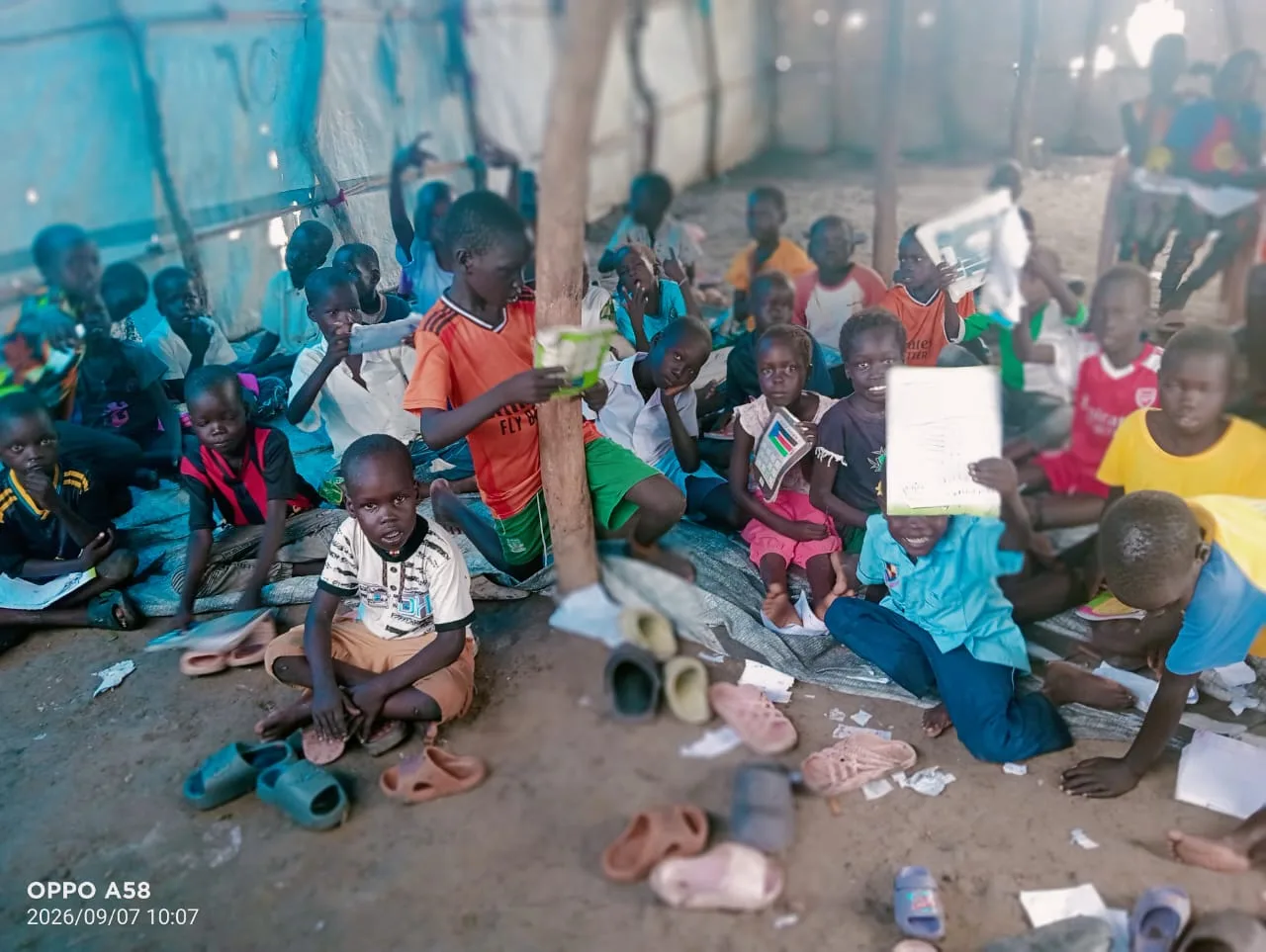
In communities where access to education is limited, like the vulnerable regions where The Maale Foundation works, thoughtful lesson design becomes even more critical. Teachers often work with limited resources and students with vastly different backgrounds and prior learning experiences. UDL principles help create powerful learning even when resources are tight.
Common Challenges and How to Solve Them
Challenge: It feels like too much extra work.
Solution: You’re not creating three separate lessons. You’re creating one lesson with built-in flexibility. Once you design it, it works for multiple students at once. Over time, it actually saves time.
Challenge: I’m worried about managing all those choices.
Solution: Start with just one or two options per principle. You can always add more later. Also, structure is your friend. Set clear expectations about what options are available and how students choose.
Challenge: I don’t have the resources (technology, materials, etc.).
Solution: UDL doesn’t require fancy technology. You can offer multiple representations with a pencil and paper. You can provide choices with basic classroom materials. Get creative with what you have.
Challenge: How do I grade fairly when students are showing learning in different ways?
Solution: Grade based on the same standards, just allow different pathways to show mastery. Create a rubric that’s format-agnostic. If the standard is “explain photosynthesis,” a student who explains it in a video, an essay, or a diagram can all earn full credit if they meet the standard.
Universal Design for Learning and Educational Justice
At its heart, UDL is about educational justice. It’s about recognizing that traditional one-size-fits-all teaching leaves some students behind—often the same students already facing the most barriers: students with disabilities, students from low-income backgrounds, students of color, students learning in a language that’s not their first.
Universal design says that these students don’t need to be fixed or accommodated. The system was just designed too narrowly in the first place. When you design wider from the start, everyone benefits.
That’s why educators working in under-resourced communities benefit especially from UDL thinking. It helps you create powerful learning experiences with what you actually have, while including every student from day one.
Getting Started Today
You don’t need permission to start applying UDL principles. You don’t need special training or expensive materials. Pick a lesson you teach this week. Ask yourself: How else could I present this? How else could students engage? How else could they show what they know?
Add one alternative to each principle. Try it. See what happens.
The journey to more inclusive, flexible, and effective teaching starts with a single lesson designed with your actual students in mind. That’s Universal Design for Learning in practice.
People Also Ask
What’s the difference between UDL and just differentiating instruction?
Differentiation usually means: I teach the lesson one way, then I add extra help for some students. UDL means: I design the lesson itself with flexibility built in from the start. Everyone benefits from the flexibility, not just students who struggle.
Does UDL take way longer to plan?
The first time you apply UDL to a lesson, it might take a bit longer because you’re thinking in a new way. But once you practice, it actually becomes faster. You’re not creating three separate lessons; you’re creating one flexible lesson. Plus, when lessons work better for more students the first time, you spend less time reteaching.
Can UDL work in large classrooms with limited resources?
Absolutely. UDL doesn’t require technology or endless materials. It requires thinking about how you present information, engage students, and let them show their learning. All of that can happen with basic classroom tools. In fact, UDL thinking is especially valuable when resources are limited because it helps you be strategic about what you create.
How do parents and families support UDL at home?
Parents can support UDL by recognizing that their child learns differently from their siblings or classmates—and that’s completely normal. At home, they can offer choices in how their child learns (does she want to read, listen, or watch a video?), provide multiple ways to practice skills, and let their child show what they know in different formats. Partnering with teachers who use UDL creates consistency between home and school, which helps every child thrive.